SR-Tiget’s epigenetic editing technology can permanently silence genes without cutting DNA and has now entered clinical trials for hepatitis B.
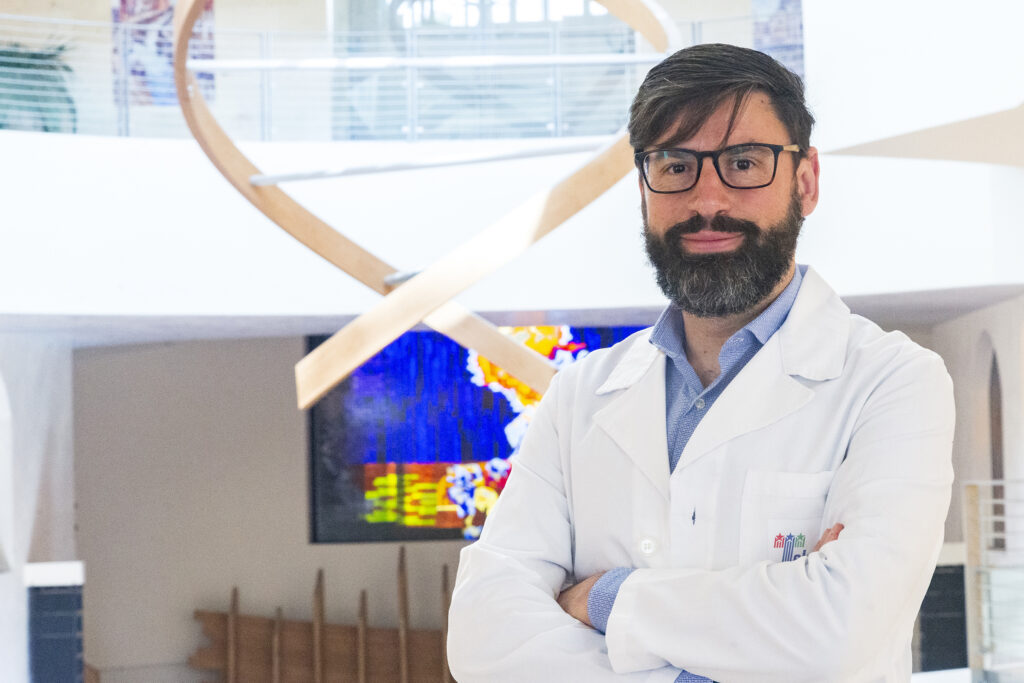
The San Raffaele-Telethon Institute for Gene Therapy (SR-Tiget) has opened up a new path in gene therapy, demonstrating for the first time that it is possible to permanently silence a gene using epigenetic editors that are expressed in cells for only a few hours, without cutting DNA. This technology is known as epigenetic editing.
The technique itself was already known, but research developed at SR-Tiget introduced a decisive advancement: removing the need to stably integrate the editor into the cell genome, together with all the risks this entails. In terms of applications, the epigenetic editing technology developed at SR-Tiget has recently entered the clinical stage for the treatment of hepatitis B. To date, there are no therapies for this disease capable of stably silencing the virus.
To reach this first milestone, SR-Tiget followed a path that lasted around a decade. “The technology was developed at our institute around 2016 and recently entered testing in humans for the first time” comments Angelo Lombardo, Head of the Epigenetic Regulation and Targeted Genome Editing group at SR-Tiget and Professor at Vita-Salute San Raffaele University.
The novelty of epigenetic editing: permanent changes with transient editors
Epigenetics is the mechanism through which cells regulate gene expression starting from the primary sequence of DNA. “This process consists of the addition or removal of specific modifications on DNA and on the proteins that organise it, which together are referred to as chromatin” explains Lombardo. These modifications regulate the activation or silencing of genes, allowing cells to maintain or acquire new functions while sharing the same genetic heritage.
Among the different epigenetic mechanisms, DNA methylation plays a particularly important role, as it is closely associated with the silencing of gene expression. It is also the only epigenetic modification that can be maintained and faithfully transmitted to daughter cells during cell division, thereby providing stability to the regulation of gene expression. These characteristics are precisely what make DNA methylation an ideal mechanism on which to base the development of epigenetic editors.
An epigenetic editor is a protein designed in the laboratory, consisting of a DNA-binding domain, which can recognise and bind to the selected target gene, and one or more effector domains, derived from proteins that naturally modify the epigenetic code and deposit DNA methylation.
First-generation epigenetic editors had a significant limitation: because they were unable to induce stable epigenetic changes, they had to be permanently expressed in cells through viral vectors, such as lentiviruses. This approach raised several critical issues. On the one hand, viral vectors are potentially mutagenic, as by inserting themselves into the genome, they may alter gene function. On the other hand, the expression of bacterial proteins, such as the DNA-binding domains of epigenetic editors, exposes modified cells to the risk of an immune response. The strategy developed at SR-Tiget overcomes these problems: the editors are delivered in the form of messenger RNA and remain active in the cell for only a few hours, long enough to deposit the necessary epigenetic modifications.
“Our technology was revolutionary in the field because it was the first to demonstrate that epigenetic editing could be long-lasting and permanent even when the editors were expressed in cells for a very short period of time” comments Lombardo.
It is precisely DNA methylation that makes stable expression of the editors unnecessary. “It is one of the few epigenetic modifications that the cell is able to reproduce during DNA replication and cell division” concludes Lombardo.
The path from PCSK9 to hepatitis B
Before moving on to hepatitis B, the first target selected was PCSK9, a gene expressed in hepatocytes, the liver cells where it plays a key role in regulating cholesterol metabolism. Its inactivation is already a well-established therapeutic strategy for reducing blood cholesterol levels in patients with hypercholesterolaemia.
Precisely because it was a well-characterised target in a widely studied biological context, PCSK9 provided the ideal model to assess, in an initial phase, the potential of the new technology and to demonstrate that a single administration of the editors was sufficient to stably silence PCSK9. But there was another reason too: because PCSK9 is a gene expressed in the liver, these studies were also crucial for identifying and optimising the vehicles — lipid nanoparticles — used to deliver the editors to the liver.
The results obtained in animal models confirmed the validity of the approach.
Building on this evidence of efficacy, feasibility and safety, the researchers moved on to a more complex target: the hepatitis B virus. Unlike PCSK9, which is a human gene present in two copies in the genome, HBV is a virus that infects hepatocytes. The specific target of epigenetic editing is cccDNA, the circular double-stranded viral DNA that forms in the nucleus of infected cells and from which all the proteins required for viral replication are produced.
Directly targeting cccDNA means targeting the primary cause of viral replication. To date, there are no pharmacological therapies capable of doing this: available treatments act on accessory proteins or prevent virion assembly, without eliminating the source of the infection. This is why cccDNA has long been considered the target of choice for a functional cure for hepatitis B.
Why acting on epigenetic modifications is advantageous
Gene editing inactivates genes by cutting DNA. Once cut, DNA has to be repaired through a process called non-homologous end joining, which rejoins the two fragments but introduces random mutations. If the cut occurs within a coding sequence, these mutations inactivate the gene.
The problem is that cuts can also occur at unintended sites in the genome. Moreover, it is becoming clear that these unwanted mutations may be much more extensive than previously thought: in its attempt to repair the break, the cell may lose significant portions of a chromosome, including adjacent genes or essential structures such as telomeres and centromeres. This gives rise to concrete genotoxic risks: translocations, rearrangements and loss of genetic material.
Epigenetic editing bypasses all these risks. Its efficacy is comparable, but without breaking the DNA double helix.
There is also another advantage: reversibility. Although epigenetic silencing is stable — in mice it has been observed for one year, and in monkeys for two — it can be reversed. By using epigenetic editors equipped with different domains, capable of removing rather than depositing modifications, a previously silenced gene can be reactivated, using the same delivery approach.
“This is a substantial difference compared with gene editing,” explains Lombardo. “Gene editing produces a modification that is difficult to reverse: once the gene has been destroyed, it is difficult to go back. With epigenetic editing, instead, it is possible to decide to switch off a gene for a certain period and then switch it back on”.
This possibility also has a practical implication if editing were to silence unintended genes — a risk, that of off-target effects, shared with gene editing. It would be possible to intervene to reactivate those genes and restore the previous condition.
The importance of industry in bringing therapy to patients
Bringing an experimental therapy to patients requires highly specialised expertise, reagents and materials that comply with very high safety standards, and investments that academia can rarely sustain on its own. “The academic world” Lombardo observes “is traditionally oriented towards discovery and preclinical research, rather than drug development, a process that requires reproducibility, rigorous quality control procedures and a strong industrial development component. In this landscape, Fondazione Telethon represents an almost unique organisation: an institution capable of bridging scientific discovery and therapeutic development thanks to the cross-cutting expertise it has in-house, not only academic but also regulatory and business development expertise. This has enabled Fondazione Telethon to bring some therapies all the way to market”.
From Lombardo’s laboratory at SR-Tiget, the epigenetic editing technology was transferred into a spin-off called Epsilen Bio, created through the Sofinnova-Telethon fund with the involvement of Fondazione Telethon and Ospedale San Raffaele. Hepatitis B was already among Epsilen Bio’s research programmes.
Meanwhile, in the United States, researchers from MIT, Harvard and other institutions had founded a company with similar ambitions, Chroma Medicine, which, however, did not hold the patent for the epigenetic silencing technology developed at SR-Tiget. Rather than competing, the two organisations merged: Chroma Medicine acquired Epsilen Bio, along with its patents and research programmes, including the one on HBV. Subsequently, Chroma Medicine merged with another US start-up, giving rise to a new company, nChroma Bio. With hundreds of millions of euros raised and around 200 people, nChroma Bio had the resources needed to take the project from the preclinical stage to the clinical stage.
Beyond hepatitis B: other applications
The epigenetic editing technology developed at SR-Tiget is not limited to liver diseases. Another possible application concerns cancer immunotherapy, where epigenetic editors are used to engineer the patient’s T lymphocytes and enhance their ability to recognise and destroy tumour cells. In this context, the main advantage of epigenetic editing over gene editing is the possibility of simultaneously inactivating multiple genes without introducing DNA breaks and, consequently, without the genotoxic risks associated with conventional gene editing.
Another line of research focuses on the central nervous system. One of the targets is huntingtin, the gene responsible for Huntington’s disease. In this case, the scientific challenge is particularly complex: the disease is caused by the abnormal expansion of a repeated sequence in only one of the two alleles of the gene. When this abnormal expansion is present, the mutated gene encodes a toxic protein whose function dominates over the normal one. An editor is therefore needed that can selectively recognise and silence the pathological allele, while leaving the other intact.
Finally, epigenetic editing could find application in the treatment of some inherited blood disorders, such as beta-thalassaemias, which are caused by mutations in the β-globin gene, one of the components of adult haemoglobin. In this context, the targeted silencing of a regulatory gene in haematopoietic stem cells could reactivate the expression of the foetal haemoglobin gene, enabling foetal haemoglobin to compensate for the functional defect in adult haemoglobin and thereby attenuate the disease.
Challenges and goals for the future of epigenetic editing
While the delivery system for the liver is now well established, reaching other organs remains the main challenge. The central nervous system, in particular, is still largely unexplored territory for lipid nanoparticles. “Many scientists use viral vectors, whereas we are trying to use non-viral vectors,” says Lombardo. “There are obvious complexities, but they have been there from the beginning: it took us three or four years to demonstrate that the technology was effective in the liver of mice”.
There is also another scientific frontier that remains open: stable gene activation. Epigenetic editing at SR-Tiget was originally developed to silence genes, but an equivalent technology does not yet exist for the reverse operation. Stable activation requires the editors to remain integrated in the cell, with the safety limitations already described. Overcoming this limit would greatly expand the field of application of the technology.
“It is always satisfying to see an idea born in a laboratory develop into a therapy. It has taken many years, but today epigenetic editing is no longer just a promise: it has reached the clinical trial stage, and it started here at SR-Tiget” concludes Lombardo.
