How AAV gene therapy for large genes overcomes size limits through two TIGEM technology platforms for inherited retinal and rare diseases.
Gene therapy is conceptually based on the correction, replacement or introduction of a functional copy of a defective gene. In practice, however, both preclinical and clinical development must address multiple biological and technical variables, including the characteristics of the disease and its clinical manifestations, the size and structure of the mutated gene or genes, and the properties of the vector selected to deliver the therapeutic sequence into target cells.
For approaches based on adeno-associated viral (AAV) vectors, a key limitation is structural. AAV vectors cannot accommodate genetic sequences larger than approximately five kilobases and are therefore unsuitable for gene therapy strategies targeting disorders caused by large genes.
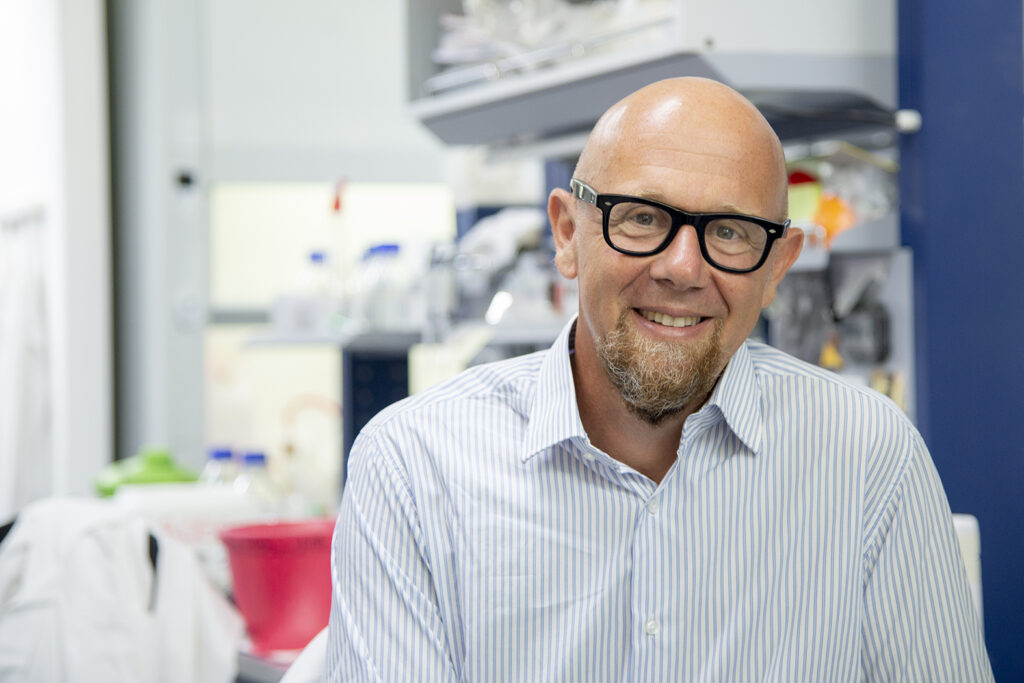
To address this constraint, researchers at TIGEM, led by Alberto Auricchio, Scientific Director of the institute and Professor of Medical Genetics at the Università degli Studi di Napoli Federico II, developed two distinct technological approaches. Both strategies are based on splitting the therapeutic gene across two separate vectors, while differing in the mechanism by which the two gene halves are reconstituted intracellularly to generate the correct functional protein.
These solutions form the basis of platform systems that can be adapted and optimised for different genes and disease indications.
Size constraints of adeno-associated viral vectors
Adeno-associated viral (AAV) vectors are currently considered the reference platform for in vivo gene therapy, where the vector is administered directly to the patient without ex vivo manipulation of cells.
However, the limited packaging capacity of these vectors represents a significant obstacle for the treatment of diseases caused by mutations in large genes, which require the delivery of a full-length functional copy.
Conditions such as Duchenne muscular dystrophy, cystic fibrosis and haemophilia are characterised by genes that exceed the carrying capacity of a single AAV vector. The same limitation applies to several inherited retinal disorders, including Usher syndrome type 1B and Stargardt disease, among the most common causes of genetic blindness.
The size constraint of AAV vectors arises from a structural limitation. These viruses consist of a protein capsid capable of encapsidating approximately 5 kilobases of single-stranded DNA, a capacity that is directly determined by capsid dimensions. Viruses with larger capsids can accommodate longer genetic sequences. Adenoviruses, for example, are approximately five times larger and can package up to 36 kilobases of DNA, corresponding to a genetic payload roughly seven-fold greater than that of AAV vectors.
Two technological platforms to overcome this challenge
Before the development of these platforms, several strategies had been explored to address vector size limitations.
In the treatment of haemophilia, the restricted packaging capacity of viral vectors has been managed by truncating the therapeutic gene through targeted deletions, thereby reducing its size compared with the native sequence. This approach preserves part of the protein’s biological activity and can provide clinical benefit. However, it does not represent an optimal solution, as the full-length gene is not delivered. Such strategies inevitably result in a partial correction, since each gene region contributes specific functional elements and is not biologically redundant.
“Our strategy followed a different rationale” explains Auricchio. “We selected large genes and divided them into two separate fragments. Thanks to the Dual vector technology, each fragment, corresponding to approximately half of the original sequence, can then be packaged into an independent AAV vector (Dual Vector technology)”.
This configuration requires two distinct vectors, each carrying one complementary half of the same gene together with the regulatory elements necessary for expression. The final product therefore consists of two viral particles rather than one, both of which must transduce the same target cell to ensure delivery of the complete genetic information. Crucially, the two gene fragments must subsequently reassemble or cooperate functionally to enable the production of the full-length, correctly folded protein.
It is precisely at this stage that the two platforms developed by researchers at TIGEM come into play.
The Dual Hybrid platform
In the hybrid platform, the DNA delivered by the two vectors is engineered to undergo recombination within the cell nucleus. As described above, the therapeutic gene is initially divided into two fragments. Each fragment is equipped with specific exogenous sequences designed to promote correct rejoining once both halves are present in the same cell.
Because the persistence of these additional sequences in the final transcript would interfere with proper protein production, splicing signals have been introduced upstream and downstream of these regions. This design enables the cell’s splicing machinery to remove the intervening sequences during RNA processing.
As a result, once the expression cassette has been reconstituted, the intermediate segment is efficiently excised, allowing the generation of the full-length, correctly assembled protein.
The intein platform
The second platform is based on a different principle. Rather than rejoining the two halves of the gene, it enables the reconstitution of the final protein. The two vectors enter the same cell, each carrying its own expression cassette, and independently express one half of the therapeutic protein.
In this case, the two protein fragments are each fused to specific elements that promote their reassembly. These short peptides, known as inteins, occur naturally in bacteria and are used to reconstruct large proteins through a mechanism called protein trans-splicing.
“As an example” Auricchio explains, “when a bacterium needs to produce a very large protein, such as a DNA polymerase, it does not synthesise it as a single polypeptide chain, but as two fragments fused to inteins. The inteins interact with each other, catalyse the formation of a peptide bond between the end of one fragment and the beginning of the other, and are then precisely excised, without adding or removing any amino acids. The result is a fully reconstituted protein”.
This system is considerably more efficient than recombination at the DNA level. However, it presents intrinsic limitations related to the correct folding and structural conformation of the two protein halves. Protein stability depends not only on amino-acid sequence, but crucially on three-dimensional structure. Splitting a protein to insert inteins can therefore compromise its stability and functionality. For this reason, multiple cleavage sites must be empirically tested to identify configurations that preserve proper folding and enable effective reassembly.
Clinical applications of the platforms
The two platforms have been applied to the development of treatments for two forms of inherited blindness: Usher syndrome type 1B, a form of retinitis pigmentosa associated with hearing loss, and Stargardt disease, an inherited macular dystrophy that initially affects the central retina. In both cases, the disorders are caused by mutations in large genes and have long been considered untreatable.
Until it was demonstrated that large genes could be successfully delivered to the retina and the corresponding proteins reconstituted in animal models, gene therapy was not regarded as a viable option for these conditions.
The decision to focus initially on ocular diseases was driven by several biological and clinical considerations. The retina represents an ideal target for gene therapy: it is a small, immune-privileged tissue that can be accessed through local injection. It requires only minimal vector doses and allows therapeutic effects to be monitored using non-invasive tests, with the contralateral eye serving as an internal control.
Gene therapy for Usher syndrome type 1B is based on the Dual Hybrid platform.
“Within approximately four to five years, in a non-profit academic setting such as Fondazione Telethon, the project progressed from platform design to proof of concept in animal models, through to the production of clinical-grade vectors and the completion of regulatory preclinical studies conducted under Good Laboratory Practice standards to demonstrate safety” Auricchio explains. In 2017, funding from the European Community enabled the launch of a clinical trial for this gene therapy.
At that stage, the strength of the published scientific data and the patents filed by Fondazione Telethon attracted the interest of the Italian-French investment fund Sofinnova-Telethon, leading to the creation of the start-up AAVantgarde in 2021. The company assumed responsibility for the clinical development of the Usher syndrome programme and subsequently for the second platform and the Stargardt disease programme, advancing both towards clinical testing.
To date, 15 patients with Usher syndrome type 1B have been treated using this Dual Hybrid gene therapy. “This represents the first administration in humans of two gene therapy vectors delivered in combination to the eye. The available data indicate an encouraging safety profile and show early signs of efficacy, which will need to be confirmed through comprehensive analysis of the results” Auricchio concludes.
AAVantgarde has also recently received authorisation to initiate a clinical trial of gene therapy for Stargardt disease in the United States and the United Kingdom and has therefore opened patient enrolment.
Beyond retinal disorders, the Dual Hybrid platform has been licensed to a US company developing therapies for hereditary hearing loss, while two independent research groups in China have applied the same technology in similar clinical studies. These trials have reported convincing improvements in auditory function in patients born deaf, further supporting the validity of the platform and its applicability across different tissues.
Advantages, safety and future perspectives
The platforms developed by researchers at TIGEM significantly expand the number of patients who may be eligible for gene therapy, making it possible to treat conditions that were previously excluded due to mutations in large genes. The data currently available indicate an overall reassuring safety profile, although these findings will need to be confirmed and consolidated through longer-term follow-up and additional clinical evidence.
Alongside the clinical results, however, certain technical and operational complexities also emerge. The use of two vectors entails more elaborate manufacturing and characterisation processes, with a consequent impact on production costs. From a technical standpoint, the approach enables the delivery of coding sequences of up to approximately 7–8 kilobases. Exceeding this limit would require systems based on a higher number of vectors, further increasing development and manufacturing complexity. For this reason, at present, no extension of the payload capacity beyond these dimensions is envisaged.
Looking ahead, “both platforms are currently in clinical development, while technological optimisation activities continue in parallel. In particular, studies are underway to improve intein efficiency through in vitro evolution strategies, with the aim of further enhancing system performance” Auricchio concludes.
Taken together, these platforms provide a concrete example of how technological innovation developed in an academic setting can be translated into therapeutic solutions for an increasing number of rare diseases.
